Many argue that there is really no nurse shortage in healthcare, but nurses have stopped working, or leave the profession as fast as nursing schools graduate new nurses. In fact, statistics show that at least 50% of new nurses leave the profession within 2 years. This same lack of retention is true for nurse aides as well. Most of the approximately 210,000 yearly openings for nurse aide employment are to replace turnover.
Two primary reasons for these departures follow: lack of leadership and toxic work environments. Internet nurse influencers insist that nurse bullying is epidemic in American healthcare, and as a former longtime STNA, I can attest to the same for nurse aides. As one who grew up on the wrong side of the tracks, I was accustomed to not being pushed around as a matter of principle, but not everyone shares that experience. Furthermore, many would certainly be surprised and disillusioned by bullying in a healthcare venue where care and support should always be taking place.
As a nursing educator, I am not only devoted to teaching skills, I am devoted to teaching students how to survive in the healthcare venue, lest our labors are in vain. I have written extensively on some basic ways of thinking to preserve the desire to remain in nursing, but recently, have come to an additional conclusion.
While recently pondering the toxic behaviors of many nurse aides and doing some research online, I noticed familiar descriptions of what we experience from these toxic aides. In addition, these same people put instructors under immense pressure in educational settings.
My research concludes the following: we are failing to recognize narcissism in healthcare education, and are unleashing these toxic individuals to increase more staffing shortages. In other words, we look the other way as a remedy to solve staffing shortages, but are actually contributing to the problem by allowing these individuals to become nurse aides.
If you take note of how toxic nurse aides behave on the floor, and then take note of narcissistic traits, they are identical.
First, let’s examine how narcissists are defined by the Mayo Clinic, Psychology Today, and Cleveland Clinic:
Key Characteristics and Components
Grandiosity: An unrealistic, exaggerated sense of superiority and uniqueness.
Need for Admiration: Constant, excessive craving for attention, validation, and praise.
Lack of Empathy: An inability or unwillingness to recognize, understand, or care about the feelings and needs of others.
Entitlement: A belief that one deserves special treatment and that rules do not apply to them.
Manipulative/Exploitative: Using others to achieve personal goals without regard for the impact on them.
Narcissism vs. NPD
Narcissistic Traits: Exist on a spectrum; mild, non-pathological self-centeredness can exist in many people.
Narcissistic Personality Disorder (NPD): A diagnosable mental health condition, defined by the DSM-5, involving a severe, pervasive, and rigid pattern of these behaviors that significantly impair functioning.
Common Behavioral Patterns
Individuals with high levels of narcissism often exhibit arrogance, intense envy of others, and fantasies about unlimited success or power. While they may appear confident, they are easily upset by criticism. The term is derived from the Greek myth of Narcissus, who fell in love with his own reflection.
First, unfortunately, healthcare is going to be a magnet for narcissists. Why? Because the profession is highly respected in our culture and narcissists crave respect. In fact, they demand it from everyone. Respect is a human need according to Maslow’s hierarchy, but narcissists think they are entitled to it. However, narcissists want all the gain (respect) and none of the pain (hard work, particularly menial aspects). Laziness is not considered an element of narcissism because the character of the work is not considered. While narcissists may be willing to pick-up shifts and spend a lot of time at a facility to manipulate the Director of Nursing and financial gain, the substance of their many hours will lack teamwork, paying respect forward, and compassion towards residents. These aides demand to be seen in a certain way in a metaphysical picture of their own delusional making.
And, often, narcissism is generational. In many cases, narcissists learn the mental illness (via how they are taught to think) through their parents. One clue concerns what their parents name them. The real-life examples are stunning, but imagine an aide on your unit or in your classroom named “Goddess Smith.”
A close examination will find empathy completely absent in these individuals. The lack of compassion is also reflected in their care for others. For certain, you will never hear them talking about residents in an endearing way. Since they have an inability to put themselves in the shoes of others, they will often be observed doing perplexing things like arguing with dementia residents and displaying an unusual level of impatience.
The most prominent sign of narcissism is entitlement. Specifically, they have a strong sense of being entitled to exist in a world as ordered by them. Hence, the rules do not apply to them. And they are not obligated to any standard of professionalism because they are professional self-ego builders, and their self-esteem is not based on any objective criteria. They are gods because their parents ordained them as such while in the womb and before they accomplished anything.
However, deep down, they know better because true self-respect is based on objective criteria and we all know that intrinsically. Hence, they rely on cheap substitutes to prop up the fake narrative of their own making. This means they will often come to work with elaborate hairdos, elaborate makeup, draped with all kinds of gawdy jewelry, and long custom fingernails, which are wholly inconsistent with accomplishing care on a LTC unit. How they look and the narrative they want to present about themselves is significantly more important than resident care and even safety. This is why clinical instructors receive significant pushback concerning dress codes during clinicals.
And, of course, the cellphone wars. Narcissists do not want to think about much of anything that does not contribute to their own metaphysical narrative about themselves. Hence, cellphones supply a constant stream of information that feeds their own desires rather than inconvenient information that is necessary to learn for CNA certification and true qualification. The internet is fraught with information about how to be a god in your own mind and act like one, and constant communication with fellow narcissists. Please note that even though young people are on the internet at least 6 hours a day, they are curiously unlearned about how to use the internet to do research on things that matter.
Of course, we all have a little bit of narcissism in us to some degree, so, how do we distinguish the difference between narcissistic-like tendencies and a Dx of narcissism? Narcissists will be indignant towards policy they don’t agree with, overtly confrontational in a way that creates excessive drama, rude, disrespectful, indifferent, and grossly unprofessional. Also, a hallmark is the belittling of others, particularly those who partake in real life-building, because they know their own life is a house of cards built on a foundation of pretense and mere appearance.
Looking the other way and allowing narcissists in healthcare is not curing staffing shortages, it is contributing to the problem. Worse yet, what’s left of staffing will be other narcissists because they are at war with CNAs that are partaking in real life-building to the benefit of LTC residents. To a significant degree, this is the dynamic that forms toxic work environments in long-term care. Saying “no” to these narcissists is not only advocating for residents, but CNAs with the right heart.
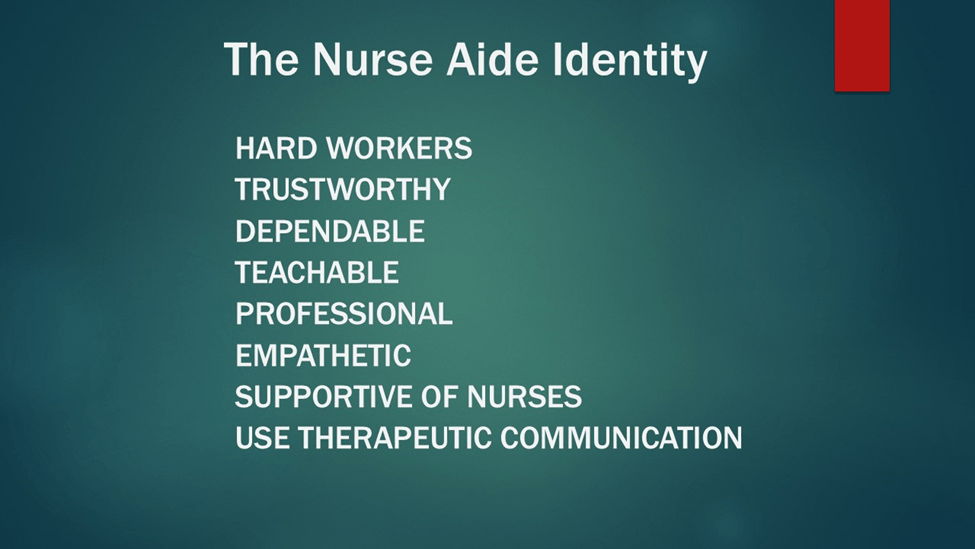
And lastly, narcissists do not aid nurses in any way, shape, or form, and therefore contribute to nurse shortages as well. In fact, narcissist nurse aides are the extreme antithesis to true nurse aides.

 Therapeutic Soul Home
Leave a comment